Word Fusion: Association
Fugo GamesWord
3.81.00 Reviews
- Version
- 1.6.0
- Installs
- 10.00K
- Age Rating
- Everyone
Screenshots
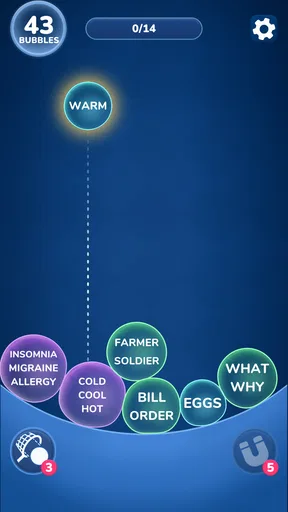
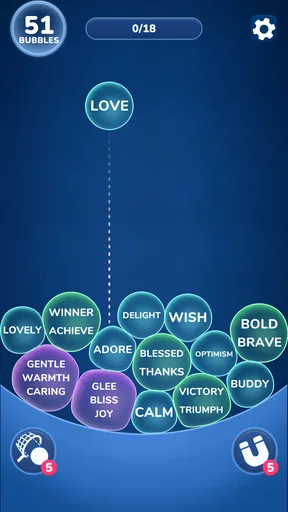
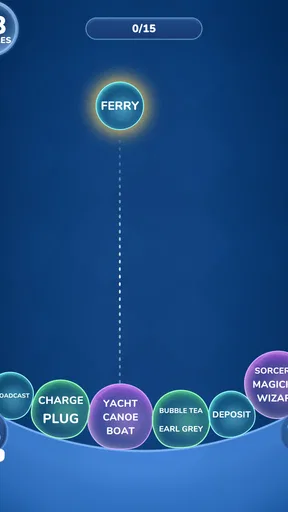
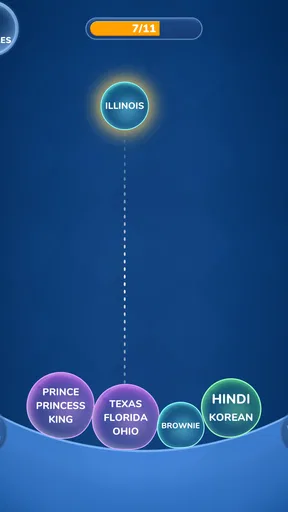
Our Review of Word Fusion: Association
 Analysis by Appyee
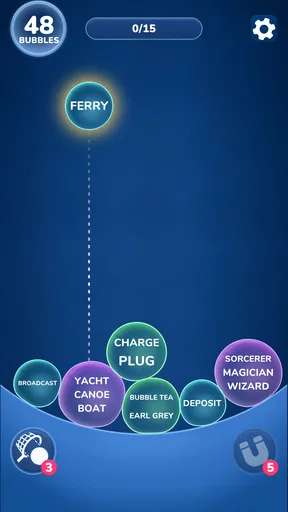
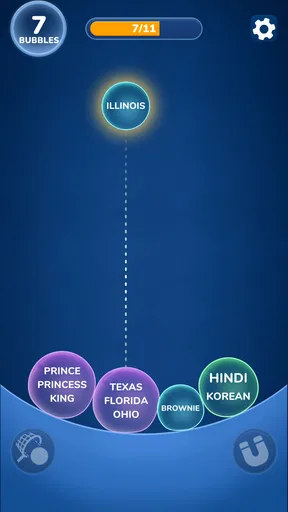
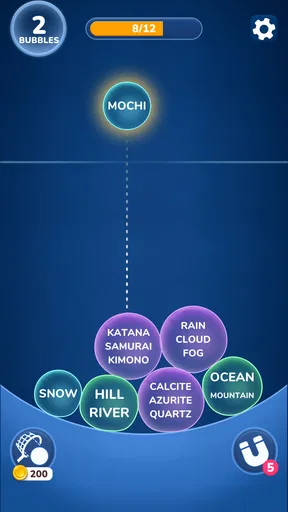
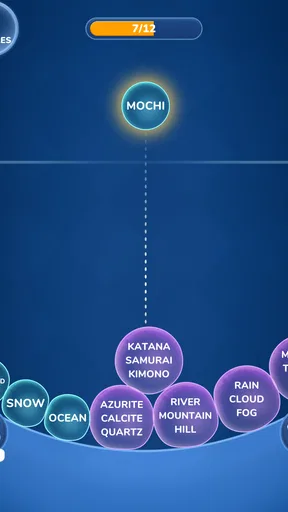
Word Fusion: Association is a word game from Fugo Games built around a simple idea: you drop bubbles, connect words that belong to the same category, and work toward clearing the board. I like that the concept is easy to understand before the first round begins, yet it still asks you to make choices rather than simply spot a word and tap it. It feels designed for short sessions, the kind of game I can open while waiting for a coffee or winding down before bed.
The current release is version 1.6.0, and the game is available free of charge for players using Android 8.0 or later. It is rated for Everyone, so the presentation is approachable for a broad audience. Fugo Games has positioned it as a casual word title rather than a serious vocabulary trainer, and that distinction matters: I would recommend it for light mental play, not as a substitute for a dictionary, language course, or traditional crossword collection.
How Word Fusion: Association feels to play today
The central loop combines two familiar actions. First, bubbles arrive on the board. Then I look for words that share a category and use those relationships to remove pieces. The interesting part is that the board is not just a list of clues. Placement matters, timing matters, and a word that seems useful immediately may be more valuable later if it helps open space or connect a stronger group.
That gives the game a different rhythm from a standard word search. In a word search, I usually scan a fixed grid for hidden spelling patterns. In a crossword, I work from clues toward exact answers. Here, I am thinking more about association and sequence: which words belong together, which move will keep the board manageable, and whether clearing one group will make the next decision easier.
The best way to approach each board is to think two moves ahead, not just chase the first obvious category. When I see a tempting match, I try to check what it leaves behind. A quick clear can be satisfying, but a less immediate move may preserve room for incoming bubbles and avoid turning the board into a crowded collection of half-useful choices.
This makes the game accessible without making every decision automatic. Someone who enjoys casual vocabulary games can understand the rules quickly, while a more experienced player can focus on efficiency. The challenge comes less from obscure words and more from recognizing relationships under pressure and managing the available space.
A compact game for ordinary breaks
The format suits everyday interruptions particularly well. I can imagine playing a few rounds during a commute, between appointments, or during a short break when I want something more engaging than scrolling. Because the basic objective is immediately visible, I do not need to remember a complicated story or rebuild a long strategy after putting the phone down.
That convenience also makes it a reasonable choice for families. The Everyone age rating reflects the approachable nature of the game, and the category-based wordplay can encourage players to explain why two words belong together. Younger players may enjoy the matching aspect, while adults can focus on planning and board control. I would still treat it as a shared casual game rather than assume it teaches vocabulary in a structured way.
For a solo player, the appeal is the small decision loop. I am not committing to a long campaign or a demanding competitive session. I can play when I have time and stop when I do not. That flexibility is one of the stronger reasons to try it, especially if traditional word games feel too slow or visually static.
What the latest version tells me
Version 1.6.0 is the current build, which gives existing players a clear point of reference when checking whether their installation is up to date. The release information itself does not provide a detailed feature-by-feature history, so I would not claim that this version introduces a particular mode, interface overhaul, or scoring change. What I can say is that the game is being presented in a maintained current form rather than as an abandoned experiment.
That distinction is useful for people deciding whether to start now. A current version can matter more than a long feature list when the core experience is intentionally compact. New players can learn the present rules without worrying that this review is describing an old edition, while returning players should judge the update by how smoothly their existing sessions continue rather than expecting a completely different game.
The product evolution is therefore best understood cautiously. The move to version 1.6.0 shows an ongoing release path, but it does not prove a particular improvement in difficulty balance, content variety, or performance. I prefer to separate that confirmed version detail from expectations about future updates. If Fugo Games continues refining the game, the most valuable changes would be the ones that improve clarity and variety without making the simple association loop feel overloaded.
What existing players should expect after updating
For someone already playing, the main benefit of staying current is access to the present build and its ongoing support direction. I would update before judging the game against older impressions, especially if a previous version felt rough around the edges. At the same time, I would not update expecting a new genre experience. The heart of the game remains the same kind of bubble placement and category matching that defines its identity.
Returning players should also reassess their habits. If I have been clearing every easy group as soon as it appears, the board can become harder to control than necessary. A better routine is to pause briefly, identify several possible associations, and select the one that improves both the current match and the next available space. This is a small change, but it makes the game feel more deliberate and can reduce the frustration of self-created clutter.
Another useful adjustment is to treat unfamiliar words as opportunities to inspect the category relationship rather than as automatic obstacles. The game is about association, so the connection between words can be more important than memorizing isolated definitions. When I encounter a group I do not immediately recognize, I look for the shared idea first. That approach makes the game more welcoming to mixed-age groups and players with different vocabulary levels.
Free access lowers the barrier to trying it, but the presence of in-app purchases means I would still pay attention to the purchase flow. Individual items range from $1.99 to $29.99. That is a meaningful spread, and it makes sense to decide in advance whether I am comfortable spending anything at all. The free entry is attractive for casual testing, while players who become deeply invested should consider whether optional purchases improve their experience enough to justify the cost.
Where it stands beside familiar word games
Compared with a crossword, Word Fusion: Association is quicker to understand and less dependent on solving a long chain of precise clues. I do not need a quiet hour or a notebook to enjoy it. The trade-off is that players who love rich clue writing, wordplay, and a sense of completing a large puzzle may find this format lighter than they want.
Compared with a conventional word search, it offers more planning. I am not merely scanning rows and columns for hidden spelling. The bubble arrangement and category decisions give each move a little more consequence. However, anyone looking for a large vocabulary database or a highly methodical puzzle may prefer a dedicated word-search app instead.
It also differs from daily guessing games that focus on finding one answer through repeated attempts. Those games often build a ritual around a single puzzle. This title is more flexible and session-based: I can play for a short time without waiting for a daily reset. That is better for spontaneous use, although it may not create the same sense of a shared daily challenge.
For me, its closest strength is the middle ground. It is more interactive than a passive matching exercise, but less demanding than a full puzzle book. That makes it a good fit for players who want word-related thinking with a visible board and a manageable commitment.
Small techniques that make the board easier to read
My first practical tip is to separate recognition from action. When several bubbles are visible, I try to name possible categories mentally before tapping anything. This prevents the first obvious pair from controlling the whole turn. It also helps reveal when a word could belong to more than one conceptual group, which is exactly the kind of ambiguity that can make a later move more valuable.
Second, I watch the empty space as carefully as the words. Clearing a category is not automatically the best result if the remaining arrangement becomes awkward. A move that leaves a clean area for future bubbles can be stronger than one that removes a larger-looking group but creates a narrow, confusing cluster. This spatial judgment is easy to overlook because the game presents itself as a word title, yet the board management is a major part of the experience.
Third, I avoid treating every difficult board as a vocabulary test. Sometimes the problem is sequencing rather than knowledge. If I cannot see a useful category immediately, I look for the move that reduces congestion or exposes another possibility. This mindset is especially helpful for players who become discouraged when they do not recognize a connection at once.
A fourth tip is useful when playing with another person: explain the category aloud before making the move. That turns a solitary puzzle into a light conversation game and can reveal alternative interpretations. It is also a practical way for parents or friends to see whether a younger player understands the association or is simply guessing.
Who will enjoy it, and who should skip it?
I would recommend it to players who like casual word games but want more movement than a static grid. It is a good match for short sessions, relaxed family play, and anyone who enjoys grouping ideas rather than only spelling words. The free price makes experimentation easy, and the broad age rating means it can sit comfortably on a shared device.
I would be more cautious about recommending it to someone who wants a deep language-learning system. The game may encourage flexible thinking and expose players to relationships between words, but its purpose is entertainment. It is not the right choice if you need lessons, pronunciation practice, definitions, progress reports, or a carefully graded vocabulary curriculum.
It may also disappoint players who need a large amount of documented variety before committing. The current store presence is modest, with over ten thousand installs and an average rating of 3.8 from around forty ratings. Those figures suggest an early or relatively small audience rather than a broadly established word-game community. I see that as a reason to try it with realistic expectations, not as a final verdict on the design.
Players who dislike in-app purchases should decide whether the free experience is enough for them before spending. Since item prices can reach $29.99, I would not make an impulse purchase simply because a difficult board becomes irritating. The better test is whether the core play remains enjoyable without extra spending and whether any optional item genuinely solves a problem I repeatedly encounter.
Remaining gaps and sensible expectations
The biggest limitation is the narrowness of the central idea. Category association and bubble clearing can be satisfying, but the experience depends heavily on how much variety the boards provide. If the same types of relationships appear too often, the game could begin to feel repetitive for dedicated players. That is the main area I would watch as I spend more time with it.
There is also a tension between accessibility and depth. Simple rules help the game work during a short break, but they can leave advanced players wanting more control, more demanding word relationships, or stronger long-term goals. Adding complexity would not automatically improve it, though. The challenge for Fugo Games is to deepen the experience without burying the clean idea that makes the game approachable.
The rating of 3.8, based on around forty ratings and one written review, is another reason to keep conclusions measured. It is enough to show that players have begun forming opinions, but not enough to describe a settled consensus. I would use the rating as a prompt to test the game personally, paying attention to whether the pace, board logic, and purchase options suit my own habits.
Device compatibility is straightforward for many users because the minimum requirement is Android 8.0. Anyone using an older Android release should check compatibility before planning around it. For supported devices, the more important question is likely personal fit: whether the combination of word grouping and board management is more appealing than a crossword, word search, or daily guessing game.
What I would watch in future development
If I were following the game over time, I would first look for clearer evidence of how new versions affect the actual play loop. A useful update would make category connections easier to understand, improve the flow of crowded boards, or add meaningful variety while preserving the quick-session character. Those improvements would help both newcomers and returning players without changing the game into something unrecognizable.
I would also watch how the balance between free play and purchases develops. A free game can be perfectly enjoyable, but the purchase design should feel optional rather than necessary to overcome ordinary difficulty. The wide item range makes transparency and restraint especially important for families and casual players.
Finally, I would look for signs that the game is becoming more suitable for different kinds of players. Newcomers need a gentle learning curve, while regular players need reasons to return. The strongest path would be to offer more interesting decisions through better board variety, not simply faster pacing or more visual noise.
My overall view is positive but appropriately measured. Word Fusion: Association has a clear identity, a friendly entry point, and enough planning to keep its simple matching idea from feeling completely automatic. I enjoy it most when I treat each board as a small exercise in association and space management rather than a race to remove bubbles.
For a free, casual word game, it is worth trying if you want quick category-based puzzles and do not need a full educational system. I would skip it if your priority is elaborate crossword clueing, structured language study, or a mature competitive community. For everyone else, the current version offers a pleasant starting point, with its long-term appeal depending on how much variety and refinement Fugo Games brings to the core experience.
Verdict
Strengths of Word Fusion: Association
- Simple word associations make it easy to learn and start playing.
- Short levels suit quick sessions during commutes or breaks.
- Progressive challenges keep the gameplay engaging over time.
- Clean visuals make clues and answers easy to read.
- Helpful hints can assist when a puzzle feels difficult.
Limitations of Word Fusion: Association
- Some puzzles may rely on subjective or unexpected associations.
- Repeated clue patterns can make later levels feel predictable.
- Hints may be limited, encouraging optional purchases or waiting.
- The game may become less challenging for experienced word players.
- An internet connection may be needed for certain features or ads.
Other Releases by Fugo Games
View All
Words of Wonders: Crossword
Word4.9

Words of Wonders: Guru
Word4.9

Wonder Blast
Puzzle4.6

Word Master
Word4.8
Similar Picks in This Category
View All
Word Search - Word Puzzle Game
Bluetile4.8

Word Search Quest - Puzzles
Blackout Lab4.8

CodyCross: Crossword Puzzles
Fanatee, Inc.4.7
Words of Wonders: Crossword
Fugo Games4.9

Wordscapes: Word puzzle game
PeopleFun4.7

Word Search Explorer
PlaySimple Games4.9
Frequently Asked Questions
What is Word Fusion: Association, and how does the gameplay work?
Word Fusion: Association is a word puzzle game based on connecting related ideas. You are shown clues, words, or concepts and must identify the association that links them together. Each puzzle encourages you to think creatively rather than simply recall definitions, making the game suitable for short sessions, relaxed play, and players who enjoy vocabulary and logic challenges.
Is Word Fusion: Association suitable for beginners and younger players?
The game is generally approachable for beginners because its core mechanic is simple to understand: examine the available words and find the relationship between them. However, some later puzzles may require lateral thinking, cultural knowledge, or familiarity with less common vocabulary. Parents should still review the store rating and content information before allowing younger children to download it.
Can I play Word Fusion: Association without an internet connection?
Whether the game works completely offline can depend on the version installed and the device being used. Many puzzle levels may be available without a constant connection, but features such as advertisements, analytics, cloud synchronization, updates, or optional purchases can require internet access. It is best to launch the game once online and check which functions remain available offline.
Does Word Fusion: Association include advertisements or in-app purchases?
Free puzzle games commonly use advertising or optional purchases to support development, and Word Fusion: Association may present similar monetization features depending on the platform and current release. Ads can appear between levels or after requesting help, while purchases may remove advertising or provide hints. Check the official store listing for the latest pricing and purchase details before downloading.
What should I do if I get stuck on a Word Fusion: Association puzzle?
If a puzzle seems difficult, first reread every word and consider less obvious connections, such as categories, phrases, locations, actions, or shared meanings. Avoid using hints immediately if you want a greater challenge, since solving the association independently is the main source of satisfaction. If hints are available, use them carefully because some may be limited or connected to advertisements or purchases.
Play our best games!


